
Perspective on Due Diligence in the ISO 37001:2025 Standard

Author: Daniel Peña I Technical Developer


Due diligence is one of the fundamental pillars of an anti-bribery management system under the ISO 37001:2025 standard. Its purpose is to allow the organization to identify, assess, and manage bribery risks associated with third parties, projects, transactions, and business relationships. It is not just about gathering information; it is about making informed decisions that are proportional to the level of risk.


In this blog, we explain what the standard requires, who must perform due diligence, and how to implement it practically and effectively.


What does ISO 37001:2025 require regarding due diligence?


The standard establishes that organizations must implement a due diligence process that:


  • Is proportional to the identified risks: For example, a small company with a low level of exposure will not apply the same level of analysis as a multinational corporation working with multiple intermediaries in high-risk countries.


  • Is applied before and during any business relationship: It is not enough to evaluate a third party only at the beginning. Periodic monitoring must be maintained, especially if the nature of the relationship changes, new information comes to light, the context of the country/region shifts, or red flags emerge.


  • Enables informed decision-making: The information gathered must allow you to determine whether to approve the relationship; mitigate certain risks (via contracts, clauses, or additional controls); or reject/terminate the relationship.


To whom should due diligence be applied?


The standard revolves around the premise: “If the person or entity can generate, facilitate, or be involved in bribery, they must be subject to due diligence.”


Considering this, due diligence applies to all parties that may generate a bribery risk, such as:


    • Third parties: Including suppliers and contractors; intermediaries, distributors, and sales agents; consultants and advisors; joint venture partners; authorized representatives, and persons acting on behalf of the organization.


    • Specific projects and activities: Such as tenders and bids; expansion into new markets; operations in countries with a high risk of bribery; and externally funded projects.


    • Internal personnel in sensitive roles: Always proportional to their level of risk exposure. This includes personnel in purchasing, sales and business development, government relations, top management, and anyone who negotiates, manages contracts, or makes payments on behalf of the organization.


    • Business associates: For example, mergers and acquisitions, strategic alliances, investors, among others.


How should an organization conduct due diligence?


The standard does not mandate a single method, but it does define the essential elements to consider. Some of these elements are:


  • Identify and classify the risk: You must be clear on the level of risk the evaluated party represents. Consider factors such as:


    • The country or region of operation.


    • The amounts involved.


    • Relationships with public officials.


    • Reputational history.


    • Ownership structure and ultimate beneficial owners.


A very useful tool for this element is a risk matrix to determine the required level of due diligence.


    • Execute due diligence at the appropriate level: You can establish three levels of depth depending on the risk, and you must document the reasons why a specific level of due diligence was applied.


    • Make decisions based on results: Use the gathered information to take actions such as establishing additional controls, clauses, training, or audits; terminating or suspending a relationship with a partner; or rejecting a relationship with a new partner. Do not forget to maintain evidence that the decision was reasoned and justified.


    • Monitor and update: Establish a continuous monitoring system (annual, semi-annual, or even quarterly depending on the risk level). Set up monitoring systems especially for long-term contracts, suppliers or agents in high-risk countries, government-related services, and activities where the third-party acts on behalf of the organization.


    • Roles and responsibilities within the organization: For due diligence to work, everyone must be clear on their role. Establish who designs and supervises the process, who reviews high-risk cases, who executes supplier due diligence, who verifies documentation, who identifies red flags, and who maintains communication with third parties.


    Tips for effective implementation


    Keep the process agile: Do not complicate the process more than necessary.


    Use digital tools: This will facilitate the storage and review of information.


    Adapt tools to your reality: Do not copy and paste models without analyzing them first.


    Establish clear red flags: Define immediate actions to take when they appear.


    Train key areas: Teach them how to detect real bribery risks.


    Document everything: Remember that in audits, evidence is everything.


    Due diligence is not just a requirement, but a strategic tool to protect your organization from illicit practices. Implementing it in a proportional, structured, and continuous manner allows you to make better decisions, reduce legal and reputational risks, strengthen transparency, and generate trust with clients, suppliers, and authorities.


    If your organization is starting the implementation of an anti-bribery system, due diligence will be one of the key processes that marks the difference between simply complying with the standard and having a truly effective system.


    References.


    International Organization for Standardization (ISO). Anti-bribery management systems. Requirements with guidance for use. ISO 37001. Second edition.


    Organisation for Economic Co-operation and Development (OECD). Due Diligence Guidance for Responsible Business Conduct. 2018. Retrieved from: OECD Due Diligence Guidance for Responsible Business Conduct | OECD on December 15, 2025.


Integrating Quality and Sustainability: The Path to Responsible Management with ISO 9001

Authors: M.Sc. Gibrán Eduardo Vallín Martínez & Eng. Santiago González Esparza


Technical Support: Integrated Systems, Global Standards


The 19th and 20th centuries marked the beginning of a new era in which human development was based on the unrestrained exploitation of global natural resources. This wear and tear, coupled with excessive consumption, brought about what became known as “environmental problems.” In recent decades, measures have been established to reduce or reverse these issues. One such global effort, established by the United Nations (UN) with the support of its member countries, is the “Sustainable Development Goals” (SDGs). Through 17 goals, this initiative seeks to eradicate the main problems facing humanity and ensure a future where development aligns with respect for the environment.


In 2024, the International Organization for Standardization (ISO), with the intention of raising environmental awareness within organizations certified in standards such as ISO 9001, ISO 14001, ISO 45001, ISO 22000, ISO/IEC 27001, and ISO 37001 (among others, totaling over 30 management system standards), established considerations regarding climate change. These amendments include requirements referencing actions to be taken regarding climate change. This paved the way for all organizations, regardless of the specific standard, to consider actions for environmental care.


One of the objectives of any organization (whether certified or not) is to guarantee that its operations can be sustained over time. In recent years, organizations have had to broaden the scope of their internal and external contexts to consider factors aligned with current issues, thereby establishing measures to minimize the impact of external factors on their operations.


Climate change is a major external factor that can impact operations. However, the sustainable management of resources allows for the fulfillment of quality objectives coupled with respectful environmental management.


In recent years, the trend for organizations certified under the ISO 9001 standard has been to offer products and services that meet (or exceed) consumer needs and expectations. This, added to the interest in protecting the environment, has made it possible for quality and sustainability to go hand in hand, giving rise to their integration within a certified system.


To achieve this integration, ISO 9001 and all ISO standards sharing the Harmonized Structure facilitate the consideration of environmental care within their various clauses. By adding efficiency and continuous improvement, resources can be utilized in a sustainable manner.


Below are aspects to consider within a Quality Management System that allow an organization to begin the path toward sustainable operations:

· Align quality objectives with the responsibility of environmental care.


· Align profitability and customer satisfaction with the principles of environmental protection and social responsibility.


· Focus on an ISO system: Considerations must include the analysis of the organization’s context, stakeholders, top management leadership, policy, actions to address risks and opportunities, quality objectives, resources, awareness, and operational controls. These are then validated and reviewed through monitoring, measurement, analysis, and evaluation, finally focusing on improvement, just as every Management System focuses on the Deming Cycle (PDCA).


Business excellence refers not only to product quality but also to the effect operations have on the environment and society. Integrating quality with sustainability within management systems is not just a trend; it is considered a strategic necessity to ensure that organizations are competitive, responsible, and enduring, building a solid system in the face of global challenges.


References.

The United Nations Development Programme (UNDP). THE SDGS IN ACTION. Viewed online at: Sustainable Development Goals | United Nations Development Programme


A product lifecycle approach to food safety

Authors: D. Peña and C. Valenzuela


In a world where food safety has become a global commitment that involves protecting consumer health, optimizing resources and ensuring the sustainability of the food supply chain, it becomes necessary to adopt an approach based on the life cycle of food products.


What is product life cycle-based food safety?


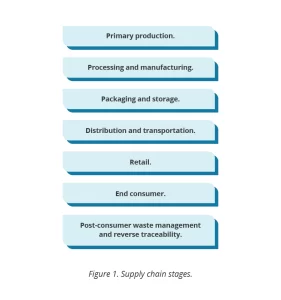
Food safety based on the life cycle of the product is consolidated as a strategic approach that allows the identification and control of hazards from primary production to final consumption. The life cycle of a food product is considered to cover all stages (Figure 1), from the procurement of raw materials to the final consumer and even the disposal of waste.


Each of these stages entails microbiological, chemical and physical risks that must be identified, evaluated and controlled in a systematic manner.


Why is it relevant to apply this approach?


· Applying this approach allows organizations to:

· Identify emerging hazards that might go unnoticed in a traditional analysis.

· Implement more effective controls by understanding the origin and trajectory of each input.

· Increase traceability and consumer confidence.

· Contribute to sustainability by reducing waste and environmental risks.

· Some international standards such as ISO 22000, FSSC 22000 or BRCGS already integrate a broader vision of risk management, which is aligned with life cycle analysis.


How does it contribute to supply chain sustainability?


· By applying a life-cycle approach, it is possible to:

· Reduce avoidable losses in production and processing.

· Design more robust processes that minimize rejections.

· Improve inventory management and stock turnover.

· Strengthen traceability, avoiding unnecessary discards in the event of incidents.

· Educate the consumer about conservation practices and consumption dates.


Tools for its implementation.


· To implement this approach effectively, it is critical to integrate tools such as:

· HACCP and risk analysis extended to the full cycle.

· Traceability and proactive recall systems.

· Good manufacturing practices (GMP) and storage.

· Product life cycle management with an environmental and safety approach.

· Protocols for safe reuse or donation of safe products.

· Internal and external awareness campaigns on waste.


Taking a holistic view based on the life cycle transforms the way organizations approach food safety: it is no longer seen as a set of isolated controls and becomes a living, connected system, where every decision, from field to fork, has an impact on product safety.


References.


M. L. Yulexis. Food life cycle analysis including food safety categories. Universidad Central de las Villas. Department of chemical engineering.


Biodiversity management in agribusiness operations

Authors: D. Peña and C. Valenzuela


Biodiversity is a fundamental pillar for the sustainability of the agribusiness sector. Without it, agricultural production loses resilience, soil deteriorates, and food security is compromised. Considering this, actively managing biodiversity in agribusiness operations becomes not only an environmental responsibility but also a smart and necessary business strategy.


In recent years, international standards like ISO and initiatives like GlobalG.A.P. have increasingly integrated guidelines that promote the conservation and sustainable use of biodiversity. This includes practices such as the preservation of biological corridors, integrated pest management, crop rotation, and the protection of native species.


Effective biodiversity management starts with an understanding of the environment. It is essential to conduct biodiversity diagnostics that identify local species, key habitats, and potential impacts of agricultural operation. Based on this information, action plans can be established to prevent ecosystem fragmentation, control invasive species, and restore degraded areas.


Some examples of how to manage biodiversity in agribusiness are:


· Conservation agriculture.


· Implementing Management Systems.


· Integrated pest management.


· Integrated management of pest control products.


· Integrated plant nutrition systems.


· Integrate biodiversity indicators, allowing for the measurement of progress and the establishment of continuous improvements. The commitment must be transversal, involving all levels of the organization.


The implementation of these practices not only reduces environmental risks and improves regulatory compliance but also strengthens the organization’s image with consumers and markets that increasingly value sustainable products. Furthermore, it fosters positive relationships with local communities by protecting shared natural resources.


Managing biodiversity in agribusiness is not a burden but a strategic investment toward more sustainable, resilient, and competitive production.


References.


Food and Agriculture Organization of the United Nations (FAO). NSP – Biodiversity and Ecosystem Services. Consulted online at https://www.fao.org/agriculture/crops/mapa-tematica-del-sitio/theme/biodiversity0/es/ el 18/08/2025.

Sustainable agricultural innovation

Author: Noé Eduardo Martínez Sahagún / Lead Auditor in Primary Production Management Systems


When we talk about overpopulation, we may think of situations close to us, such as expensive housing, traffic, resource scarcity, pollution, and global warming. Or we may think of countries where the manifestations of this global phenomenon are already visible. According to the UN, “The world’s population currently stands at 8.2 billion people and will grow over the next sixty years, reaching its peak at about 10.3 billion people,” who, as we know, try to eat regularly.


But have you ever wondered where the food comes from to feed the nearly 9 billion people who live on our planet daily? And no, the answer is not from supermarkets, but from agriculture, which must produce food to nourish us today and, in the future, with increasingly fewer resources and more challenges. Is it possible to produce a large quantity of food while being in harmony with the environment? What will food production look like in the future?


Meeting humanity’s food needs and protecting the environment is only possible by developing and implementing precision agriculture. Since the technical innovations that gave rise to the “green revolution” in the 1960s, methods have been developed to increase the amount of food produced by the land to meet global food demand. It is important to mention the context of that revolution, as the current problems did not exist, and the availability of numerous resources facilitated the efficiency of these practices. However, today, limited by many factors such as pests, water scarcity, infertile soil, climate change, and economic issues, etc., much more food must be produced with fewer resources.


Activities such as precision irrigation, soil and plant analysis, the use of drones or satellites, and practices like crop rotation, agroecology, the use of organic fertilizers, and responsible soil management are strategies that help conserve biodiversity, protect ecosystems, and reduce water and air pollution.


Sustainable agricultural innovation emerges as a strategic response to this problem, integrating technologies, practices, and knowledge that allow for responsibly increasing productivity. This new vision of agriculture promotes a balance between economic efficiency, social equity, and ecological sustainability, driving production systems that are resilient and adapted to current and future challenges.


Research, digitalization, and the rational use of resources have become fundamental pillars for transforming the agri-food sector toward a more just and sustainable model.


Another important aspect is the role of farmers, who must be trained and supported to innovate in these new ways of producing. Collaborations with educational institutions, companies, communities, and governments are fundamental to putting these activities into practice on the ground and ensuring they are accessible to everyone, regardless of the size of their production.


Sustainable agricultural innovation represents a key tool for facing current challenges in food production, climate change, and the conservation of natural resources. Through clean technologies, regenerative practices, and the integration of traditional knowledge with scientific advances, it is possible to transform agricultural systems into more resilient, efficient, and environmentally friendly models. Fostering this innovation not only ensures the sustainability of the agricultural sector but also food security and the well-being of present and future generations.


References:


[1] Food and Agriculture Organization of the United Nations (FAO). Agrifood Systems. Viewed online at: https://www.fao.org/food-systems/en on 11/04/2025.


[2] United Nations (UN). 17 Goals to Transform Our World. Viewed online at: https://www.un.org/sustainabledevelopment/ on 11/04/2025.

Strategic Integration of Artificial Intelligence in ISO Management Systems

Authors: D. Peña & C. Valenzuela.


In a business landscape characterized by constantly shifting market competition, organizations rely on Management Systems (MS) based on ISO standards as a cornerstone for operational excellence, sustainability, and resilience. These systems, long considered the gold standard for demonstrating quality, safety, and efficiency, are on the cusp of a fundamental transformation. This evolution is not driven by a revision of clauses, but by the integration of one of the most disruptive technologies of our era: Artificial Intelligence (AI). In this blog post, we will explore how AI enhances each phase of the Plan-Do-Check-Act (PDCA) cycle of continuous improvement, which underpins ISO management systems.


· The common language of ISO and AI.


To understand the transformative impact of AI on management systems, it is crucial to establish a solid foundation in the principles that govern both domains. Far from being separate worlds, MS and enterprise AI share a common language centered on processes, data, risk, optimization, and improvement.


· AI in action: Enhancing the continuous improvement cycle (PDCA).


Artificial Intelligence acts as a catalyst in each phase of the PDCA cycle. By integrating AI, organizations can execute the continuous improvement cycle in a faster, more precise, and fundamentally data-driven manner, based on much deeper analysis. The following table provides an overview of how AI can be applied to the key clauses of the harmonized structure for ISO management systems, which align with the PDCA cycle.


Table: AI Application within the Harmonized Structure of ISO Management Systems.


Clause AI Application Key Benefit

4. Context of the organization

Analysis of news feeds, real-time data, and forums to monitor stakeholder perception and brand reputation.

Proactive, real-time identification of contextual risks and opportunities.
5. Leadership Generation of dashboards that summarize Management System (MS) performance and align it with strategic objectives.

More informed, evidence-based leadership decision-making.
6. Planning Predictive models to identify operational, safety, or compliance risks before they materialize.

Transition from reactive to predictive and proactive risk management.
7. Support Generative AI to create draft
procedures and policies; personalized training platforms based on employee
performance.

Resource optimization and a dramatic acceleration of document management and training.
8. Operation Real-time data monitoring; predictive maintenance on machinery to prevent unplanned downtime.

Increased operational efficiency, reduced defects, and minimized downtime.

9. Performance evaluation

Anomaly detection in process data to flag potential nonconformities; analysis of audit data to identify high-risk areas.

Continuous monitoring instead of periodic checks; more focused and efficient audits.
10. Improvement AI-assisted Root Cause Analysis (RCA) to identify the underlying factors of an issue; recommendation of corrective and predictive actions.

Faster, more accurate problem resolution and prevention of nonconformity recurrence.


Plan: AI-augmented strategy and objectives


In the planning phase, AI transforms information gathering and risk assessment from a periodic exercise into a dynamic, continuous process.


Context and stakeholder analysis: AI can automate and enrich this process by continuously analyzing vast volumes of unstructured data from public sources like news, market reports, and social media. It can identify emerging trends, legislative changes, or shifts in stakeholder perception, providing a real-time view of the organizational context.


Risk planning and management: Machine learning models can analyze historical production, maintenance, and incident data to predict the likelihood of future failures in equipment, processes, or the supply chain. This allows organizations to move from mitigating known risks to predicting and preventing emerging ones, aligning perfectly with the principles of the ISO 31000 risk management standard.


Objective setting: Through process simulation, an organization can analyze how different changes might impact its operations, enabling the definition of data-driven objectives and the optimization of strategies to achieve them.


· Do: Optimized operations and resources.


In the execution phase, AI becomes a digital workforce that optimizes resource use and automates complex processes, enhancing efficiency and consistency.


Resource optimization: AI can dynamically optimize resource allocation. For instance, predictive maintenance systems use sensor data to forecast when a machine requires service, preventing costly failures and unplanned production downtime. In human resources, AI can analyze workloads and projected demand to optimize shift scheduling and staff assignments.


Document management with generative AI: Generative AI can produce initial drafts of procedures, policies, and manuals from templates and standard requirements, which are then reviewed and validated by subject matter experts. It can help maintain consistency across all documentation, detect obsolete or contradictory clauses, and simplify version control, significantly reducing the administrative burden.


·Check: Continuous monitoring and auditing.


The verification phase is where AI demonstrates its ability to process data at a scale and speed unattainable by humans, enabling continuous monitoring and deeper audits.


Real-time monitoring and measurement:Instead of monthly or quarterly reviews of Key Performance Indicators (KPIs), AI allows for continuous monitoring. Smart dashboards can connect directly to production, CRM, or ERP systems to visualize performance in real-time. Algorithms can automatically alert managers when an indicator deviates from its target, enabling immediate intervention.


Anomaly and nonconformity detection: An AI system can analyze thousands of variables in a manufacturing process and detect a combination of factors that, while individually within limits, together indicate a high probability of producing a nonconforming product. This allows for the identification of potential nonconformities before they occur.


AI-augmented audits: AI can automate the task of collecting and analyzing evidence samples, transcribing audit interviews, and flagging high-risk areas that warrant deeper investigation. This frees auditors to focus on professional judgment, assessing organizational culture, and strategic analysis, rather than on the manual verification of records.


· Act: Proactive and Intelligent Improvement.


In the final phase of the cycle, AI provides the tools to move from simple problem correction to proactive improvement and intelligent prevention.


AI-assisted root cause analysis (RCA): When a nonconformity occurs, AI can accelerate and improve the accuracy of the root cause analysis. By processing data from multiple sources, algorithms can identify correlations and causal factors that might be invisible to traditional methods.


Corrective and predictive actions: An AI system can not only suggest an action to correct a failure that has already occurred but can also predict an imminent failure and recommend a preventive action to avoid it entirely. This embodies the essence of continuous improvement and risk-based thinking.


The integration of Artificial Intelligence into ISO Management Systems represents a paradigm shift-an evolution from structured compliance to intelligent excellence. The benefits are transformative: unprecedented operational efficiency, achieved through the automation of complex processes; proactive risk management capabilities that anticipate problems rather than react to them; strategic decision-making grounded in deep data analysis; and a genuinely accelerated continuous improvement cycle.


References:


Automation Anywhere. What is enterprise AI? Benefits, best practices, and examples. Viewed online at What is Enterprise AI? Benefits, Best Practices, and Examples on 04/07/2025.

ISO 15378:2017 Packaging in medicinal products

Author: Gerardo Zarate | Multistandard Lead Auditor

The international standard 15378 specifies the requirements to implement ISO 9001:2015 in the design, manufacturing and supplying of primary packaging materials for pharmaceutical products. This includes as the main pillars the following:

  • Good Manufacturing Practices (GMP)

  • Risk management

  • Quality control

  • Customer Satisfaction


Coming up next, meet some of the most common examples of drug packaging:


Primary Packaging

1. Ampules: for injectable drugs.

2. Vials: for liquid or injectable drugs.

3. Flasks: for liquid or powder drugs.

4. Pills or Capsules: for orally administrated drugs.

5. Inhaler systems: for pulmonary administrated drugs.


The improvements in pharmaceutical distribution have led to the development of new technologies that ensure drug preservation throughout the whole supply chain, new packaging technologies are shown with the intention of having additional options in their distribution, such as:


  • Intelligent materials: which can detect changes in the product or environment.

  • RFID tags: for product tracking and verification.

  • Biodegradable packaging: to reduce environmental impact.

  • Smart close systems: which can detect if the packaging has been previously opened.

  • 3D printing technology: to create personalized and complex packaging.


Benefits of implementing ISO 15378

The implementation of ISO 15378 can offer various benefits, including:

  • Quality improvement: by ensuring that the primary packaging materials comply with client and regulatory requirements based on quality standards regarding the risk of each drug.

  • Risk management: by identifying and addressing the risks present in the packaging process, as it is crucial that the drugs comply with the quality and safety they were manufactured for.

  • Customer satisfaction: by providing products that comply with the specific needs and expectations of each market as well as the national and international regulations.

  • Brand protection: by displaying conformity with quality and packaging safety to correctly safeguard pharmaceutical products.

  • Regulatory compliance: by ensuring that compliance with legal requirements and applicable regulations and are kept under regulatory agencies verification.


In essence, the primary packaging of drugs is fundamental to ensure the quality, safety and efficacy of pharmaceutical products, their design and manufacturing must comply with strict quality and regulatory requirements, therefore the importance of considering the implementing ISO 15378 which provides the specifics “shoulds” for an organization to show its clients that the manufacturing of packaging materials for drugs is compliant and adequate for its distribution.


Prohibition of Red Dye N°3 – FDA.


Authors: D. Pe
na and C. Valenzuela. I Technical Developer


Recently, the US Food and Drug Administration (FDA) made a historic decision to ban

the use of the artificial color known as Red No. 3 in food and
medicine. This coloring is
widely used to give a vibrant red color to a variety of products
, including candies,
sweets, cereals, beverages, and
drugs. But what led the FDA to make this decision, and
what implications does it have for the food industry and consumers?


What is Red
Dye No. 3?


It is a synthetic dye that has been part of the food industry for decades,
particularly in
products intended for children, such as candy and beverages, as well as in some oral

medications, including
cough syrups. However, its popularity has been undermined by
concerns about potential health risks.


In animal studies, particularly in rats, the dye was shown to be potentially carcinogenic,

which eventually led the FDA to review its use.


The Prohibition: Why
Did It Happen?


The
primary reason behind the FDA’s ban on Red No. 3 is related to health risks detected
in scientific studies. Research conducted on rats exposed to this dye
revealed a
possible link to cancer development
. However, no direct link has been found between
Red No. 3 and cancer in humans
. The FDA acted under the precautionary principle
(Delaney Clause)
, as public health is its top priority. In an official statement, the FDA
indicated that,
although no definitive evidence has been presented on the risk to
humans, the precautionary principle in public health matters is fundamental, which led

to its decision to remove this colorant from the market
.


Learn more at the following link
: FD&C Red No. 3 | FDA


Impact on the industry
.


This will
affect not only food manufacturers but also the pharmaceutical and cosmetic
industries that use
the colorant. Replacing the dye with safer alternatives is a logistical
and financial challenge, but it is an
essential step toward improving food safety and
protecting consumer health.


Although the ban will be gradual, consumers may begin to see products without this

colorant on the market, which could contribute to greater awareness of artificial

additives in food.


The banning of Red No. 3 marks an important milestone in the regulation of food additives,
sending a clear message about the importance of safety in the products we
consume. Although the elimination of this colorant may have some impact on

organizations
, this type of decision is essential to ensure consumer protection and
encourage innovation towards safer alternatives
, promoting an environment where
food, pharmaceutical
, and cosmetic products are more transparent and safer for
everyone.


References:


[1] FDA. FD&C Red No. 3.
Viewed online at FD&C Red No. 3 | FDA on 02/20/2025.

Occupational Health and Safety Training: Key to a Healthy Work Environment.

Authors: D. Pena and C. Valenzuela.


Training in occupational health and safety, including mental health, is a priority for modern organizations. It is not only a legal requirement but also essential for the well-being of employees and the organization’s success [1]. In this blog, we will see why investing in these training programs is essential, the main benefits for organizations, and how it contributes to effectively implementing an occupational health and safety management system under ISO 45001.


· Importance of Occupational Health and Safety Training [2].


Accident and Illness Prevention: Training enables employees to identify and manage occupational risks, significantly reducing accidents and illnesses. This translates into less sick leave and lower compensation and medical care costs.


Mental Health Promotion: Mental health training programs enable employees to learn how to handle pressure situations, promoting an emotionally balanced and healthy environment.


Improved Work Climate and Productivity: A well-trained team in health and safety tends to be more productive and motivated. In addition, employees who feel that their well-being is a priority are more committed to the organization.


· Benefits for Organizations [3].


Reduced Operating Costs: By preventing accidents and illnesses, organizations reduce the costs associated with absenteeism, personnel turnover and the payment of occupational risk premiums.


Strengthening Reputation: Organizations that prioritize the safety and well-being of their employees build a good reputation as responsible employers, which can attract talent and improve customer relationships.


Increased Innovation and Creativity: A healthy work environment fosters creativity and innovative thinking, driving continuous process improvement.


· Training and ISO 45001: An Effective Occupational Health and Safety Management System [4].


Occupational health and safety training plays a key role in the compliance and success of a management system under ISO 45001 as it contributes to:


Competence and Awareness: Ensures that employees understand their responsibilities within the OH&S management system, contributes to risk management and general health and safety awareness, including mental health.


Participation: Training employees in these areas increases awareness and enables them to actively contribute to the continuous improvement of the OH&S management system.


Continuous Improvement: Continuous training of employees in new regulations, safety techniques and mental wellbeing ensures that practices within the organization are updated and adapted to new risks and needs.


Performance Evaluation: Training is also aligned with the need to evaluate the performance of health and safety activities, helping to identify areas for improvement and ensure that the system is working effectively.


Occupational health and safety training is a strategic investment for organizations. It protects employees, improves productivity, reduces operating costs, and strengthens organizational culture. By investing in staff’s physical and mental well-being, organizations create a positive work environment that translates into long-term success.


References:


[1] OIT. Trabajar para un futuro más prometedor. Comisión Mundial sobre el Futuro del Trabajo, Ginebra. Descargado de: https://www.ilo.org/wcmsp5/groups/public/—dgreports/—cabinet/documents/publication/wcms_662442.pdf el 21/03/2025. [2] Deloitte. El impacto de la salud mental en la productividad corporativa. Descargado de: impacto-de-la-salud-mental-en-la-productividad-corporativa.pdf el 21/03/2025.


[3] C. K. K. Chung, C. C. Méndez y V. C. A. Benítez. “Importancia de la salud mental en la productividad laboral: Un estudio cualitativo basado en la realidad del Paraguay, 2023.” UNIDA Salud Health Journal. Vol 3. Num. 1. pp. 17-21. 2024.


[4] Sistemas de gestión de la seguridad y salud en el trabajo. Requisitos con orientación para su uso. ISO 45001. 2018.

Part II. Challenges in organizations to achieve a safer and healthier working environment. 

Authors: D. Pena and C. Valenzuela 


The current way in which workplaces are perceived by society has led organizations to incorporate, as fundamental aspects within their policies, the health, safety, and welfare of workers. These aspects, in addition to demonstrating their commitment to society, enable organizations to improve their productivity, competitiveness, and economic performance. 


Several studies have shown that organizations that can identify current safety and health challenges in their workplaces are among the most successful and competitive in the long term, as they tend to have the highest employee retention rates.[1] 


The ISO standardization body, in its article entitled “Challenges for a Safer and Healthier World of Work,” groups classifies current challenges related to worker safety and health into four pillars: climate change, psychological health and well-being, new technologies, and demographic changes. 


In this blog, we will focus on two of these pillars: New technologies and psychological health and wellness. In our last blog, we already addressed climate change and demographic changes. 

CHALLENGES IN ORGANIZATIONS TO ACHIEVE A SAFER AND HEALTHIER WORKPLACE. Part I 


  • New technologies. 


Technology presents the opportunity for the use of drones instead of people in hazardous environments, as well as the use of smart personal protective equipment with real-time monitoring technology, which provides workers with greater physical protection.  


Artificial intelligence (AI) has significant potential to help organizations analyze data more efficiently, identify problems quicker, and make more informed and data-driven decisions [2]. 


Virtual reality enables worker safety and health training and development. 


Technology continues to change the way we work, creating opportunities and challenges related to employee health and safety. Its use will help reduce risks, if risks from hacks or malfunctions can be addressed and the right balance is struck between embracing innovation and maintaining proven safety practices ([3]). 


  • Psychological Well-Being. 


In recent years, concepts such as unemployment, precarious working conditions, job instability, and underemployment, among others, have led today’s society to characterize the world of work as conflictive, generating greater awareness among workers of the potential impact of work on their psychological health and well-being. This situation brings with it the expectation that organizations could and should do more to manage this impact. 


Mental health risks at work are related to specific characteristics of the workplace, career development opportunities, excessive workloads or pace of work, understaffing, excessively long working hours, lack of control over work design or workload, and unsafe or poor physical working conditions, among others ([4]). 


This new scenario, perceived as stressful, has a profound impact on the psychological well-being of workers. While some individuals can cope with these situations better than others, it becomes necessary for organizations to develop strategies to manage this scenario. 


Bibliography: 


[1] OMS. Ambientes de trabajo Saludables: un modelo para la acción. 2010. Recuperado de: Healthy Workplaces_Template_Spanish.pub (who.int) el 28/06/2024. 


[2] American Society of Safety professionals, Tackling Today’s Safety Challenges. 2024. Recuperado de: https://www.assp.org/about/tackling-todays-safety-challenges el 28/06/2024. 


[3] C. Martin. Los numerosos desafíos para conseguir un mundo laboral más seguro y saludable. ISO. Recuperado de GUEST ARTICLE_Occupational health and safety_Martin Cottam_TEMPLATE FINAL_Avec image (ES).pdf (iso.org) el 07/06/2024.  


[4] OMS. La salud mental en el trabajo. 2022 visto en línea en La salud mental en el trabajo (who.int) el 28/06/2024.